

You have to love Worth1000.com (which is a daily image manipulation contest site)’s galleries. This one, “archaeological anomalies” sets out to provide the missing links between man and beast…. and the moon….. and disney… and apple…
Author: Melissa Terras
Random Digital Ephemera Fun
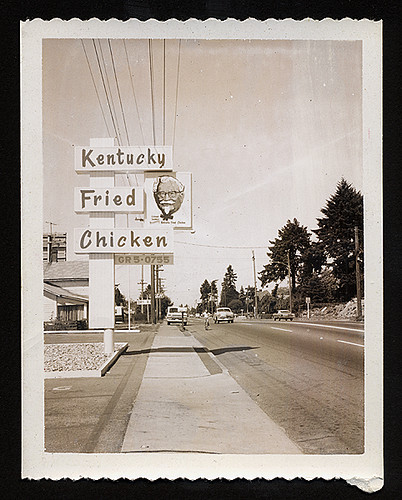
… today, is courtesy of a flickr group which collects 1960s polaroid pictures of signs in Washington. Beautiful.
On the Radio
So, today I am off to the BBC to be interviewed (live! gulp) about my work with the Vindolanda Texts, along with Prof. Alan Bowman from the Centre for the Study of Ancient Documents, University of Oxford. We’ll be on “The Material World” on BBC Radio 4 at 4.30-5pm.
Of course, it had to be on a day when I am sneezing like a banshee, but I hope I can see through the lempsip fog to speak intelligently for 15 mins or so!
If you miss the program, fear not: you can listen again for a week or so, online.
update: it went well, I think, although I fear that live radio is not for me on a regular basis!
Happy New Year – out with the old, etc.
2007 saw technology march on apace. At this time of year, there are various retrospectives flying about, giving overviews of what has happened. Try the Indepedent’s “The Year in Review: Technology“, Technology Review’s “The Year in software“, Computing.co.uk’s review of the most important issues in e-commerce, News.com’s “year in review, picturing tech“, Computerandvideo games.com’s “PC Games of 2007” (other platforms are available) , ReadWriteWeb.com’s “Internet TV, the year in Review“, and randomly, the “Five Coolest Hacks in 2007″ (courtesy of Dark Reading, via John Naughton).
Which is always tempered with crystal gazing ahoy. How will technology change our future over the next decade? Try the BBC’s “Technologies on the rise in 2008” , the BBC’s commentator Bill Thompson on “Cloudy visions of the future” , the Sydney Morning Herald’s “Ten things that will change your future“, and the Guardian’s “Facebook is so last year – welcome to the hit websites of 2008“.
There, that should keep you from doing some real work for a while.
Out and About
One of the drawbacks of teaching something like digitisation at University level, is that although you tend to be able to keep up with the theory and the recommendations, you dont really have time to get involved with projects yourself, or to see how things are still progressing in the real world very often. I suspect this is a problem common to most lecturers, and its important to, now and then, see how “those who can do” are doing things.
Yesterday, I was really lucky to be given a behind the scenes tour of the digitisation workflow at the National Gallery, London. Colin White, from the photography department, spent some time showing me around the various studios, archive, offices, and talking through the process of capturing and disseminating digital images of the collection.
Interesting insights? The emphasis on consistency of the images – rigourously benchmarked and checked – and the close relationships between the digitisation team, the print on demand service, and those developing new and novel ways to explore and examine the collection. It was also interesting to see how many dedicated staff there were looking after the relatively concise collection – making sure things were done properly, for posterity. I have to say, of all the projects I’ve seen round, they are really taking on board issues of workflow and quality and grappling with the issues of image veracity that we all are in this digital age. It was a really useful day for me, and thanks to the team for showing me round.
Now I’m looking forward to the redesign of their webpage, which should be happening later next year!
VERA is still passive
Do you remember this post about a great passive aggressive note found at the Silchester dig, which someone submitted to passive aggressive notes.com?
Well, today, we made it into the Guardian. The print copy also contains the photo.
Evidence for this unlikely renaissance is readily available at passiveaggressivenotes.com, an online clearing house that allows sarky notes from employers, flatmates, landlords and strangers to be posted anonymously so that all the world can speculate about the wellsprings of pent-up anger motivating their various authors. “Ben – I have a concern about the removal of your futon,” begins one effort, sent in by Ben, who found it stuck to his futon when he went to remove it.Other examples of the genre include one from an archaeological site in Silchester, Hampshire (“Missing: 33 pencils, 39 erasers. Search your pockets, search your tent, search your conscience”),
TEI@20 meeting
I’m washington at the moment, in the TEI@20 conference. Actually, I’m writing this at the back of the lecture room, with one ear cocked to a panel session about funding for digital humanities.
I gave a plenary paper this morning about TEI by Example, which I think went down ok (phew).
One of the things which came out of the comments and questions is the importance of producing introductory materials which show *why* you would bother with this whole TEI markup malarky – getting across a few examples not only of markup but of what you can do once you have marked something up. For those learning TEI, grasping this can really suck people in. My students eye’s light up when the penny drops about *why* you go to all this bother, and see the type of transformations and analysis that TEI encoding affords.
Which is something we at TEI by Example must address. hmmmm.
No news is good news
Its term time – and my time to look at things on the web is much depreciated. But I’ve been having fun playing with websites I refer to in lectures. (This year, as an experiment, I’ve been putting all my links up on my delicious page, as I refer to them in lectures. Two weeks into term, and I’ve already pointed my students to 212 websites. The students seem to like it – spare minutes at the end of a lab session can be spent browsing this “extended set reading”, and its a nice record of the large spread of material we cover, even just in passing).
Todays choice, in particular, is the Bridgeman Art Library website. I’d recommend it as a place to idle away those art historical yearnings. Crowding round a slide cabinet all trying to see miniature slides of Giotto all seems another lifetime away – only a few years on since I remember elbowing Zoe in the ribs to try and get a better look at the annunciation. The Bridgeman has 323 images by Giotto alone available online. (Maybe having resources like this available would have improved my student essays!)
Digitize *this*!

Just back from a holiday in Estonia and Latvia. Estonia must be the most wired country I’ve been to – wifi symbols everywhere (strange place to make an annual intertube fast, then). Latvia… not so much. Every now and then in rural latvia there was a giant road sign pointing to “INTERNETS”, generally at a library, where people could access the ‘net. Just shows the importance of libraries to the rural environment.
The picture above is from the Vaide horn museum, near the Kolka cape, Latvia. (The horns are not hunting trophies -they are discarded horns found during environmental protection inspections over a period of thirty or so years.) Strikes me as the kind of memory institution that digitisation wouldnt serve very well…. the whole point is the atmosphere of being there. In fact, I can find very little about it on the web at all.
Amateur Digitisation of Ephemera
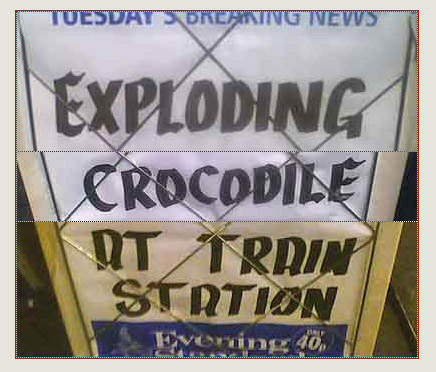
There are many things that I love about the Internet – and one of them is amateur digitisation projects which capture ephemera about modern/recent life for posterity. There has been much talk about web 2.0 and user generated content, but that seems to focus on the pictures-of-folks-on-holiday or vidoes-of-stuff-which-is-newsworthy angle: not on the good folks of the interverse who spend much time finding, cataloguing, digitising, and mounting collections of things online which no institution would have the time, or facilities, or foresight, or interest to go near. (Sure, there are some major and important ephemera digitisation projects out there, such as Electronic Ephemera at Oxford, but that revolves around the digitisation of a collection of objects which age from 1508 to 1939). I adore that people find the time to build shrines to long-defunct comics, such as Misty (although they recently had to take down the complete digitised archive due to copyright issues). Folks that make random collections of things like pictures of a monster or robot carrying off a fainted heroine in his arms (In my arms) – the digital equivalent of a cabinet of curiosities. Museums which would just not get funded in the real world, for whatever reason- such as the Museum of Menstruation and Women’s Health: an important, if ramshackle, and often hilarious archive of the development of sanitary products and their advertising. Collections of the real ephemera of life – things found on the ground – passive aggressive notes left for others – random stuff found in junkshops. Its all a hidden, different world and approach than that taken to digitisation within the information profession, but no less important for its lack of institutional backing.
Today’s find also demonstrates Fun With Internet Technologies. I have been aware of the Evening Standard Headline Crisis collection of images, depicting gloomy headlines from one of the UK’s most… melodramatic? newspapers (and how fleeting are those headlines?), but now comes the mashup: the Evening Standard Headline Generator. Genius.
 Professor Melissa Terras MBE FReng