Where’s the Party?


Today is the official, internal launch of the new UCL Centre for Digital Humanities. There will be a small internal launch party – if you are around and at UCL, then more details are here – but a bigger external launch in May (email me if you want to go on the guestlist. There will be much wine and song for all in the DH world then).

We’ve got a really interesting blog, which may be worth subscribing to – lots of things in the pipeline…

Wish us luck. Posters are printed. Invites are out. Sticky-backed plastic is ordered to hang forementioned posters. And I have my party shoes on, rather than converse trainers, so it must be a special day…

Moon Museum Redux

A couple of years ago I briefly posted about the “Moon Museum” – a secret project where some people at NASA had incorporated some modern art into the Apollo 12 Moonlanding Unit.

A few weeks ago, whilst doing some blog maintenance, I noticed that there had been a lot of comments on this post. It turned out that some people who had worked on this project had both found my blog – and got in touch with each other through the comment postings. Worth having a read!

I wrote to Burt Unger and, he gave me a little history about the project, and his involvement, which I thought you’d like to see. Imagine being the person who broke that mold!

I’ve done some research on the Moon Museum, especially before I got involved in the project so I think I can cover most of the details.

The project was a brainchild of Forest Meyers who is a renowned sculptor and artist. He petitioned NASA to allow them to transport an example of modern pop art to the moon onboard one of the space moon landers. NASA did not respond to his request so he went ahead anyway hoping in one way or another to put some art on the moon. Forest contacted five top artists in the field and asked them for a sketch or a doodle that he hoped would be the first art on the moon. The six artists; Robert Rauschenberg, David Novros, Claes Oldenburg, Andy Warhol, John Chamberlain and Forest Meyers made sketches. Their drawings can be seen on the web by Googling Moon Museum.

Forest dubbed the collective art the Moon Museum. Forest Meyers knew two engineers/ scientists at Bell Labs, Fred Waldhauer and Bill Kluver. They had worked together in a group named Experiments in Art and Technology. The six sketches were given to Fred Waldhauer who worked at Bell Labs in Holmdel, NJ. He in turn gave them to Bob Merkle , an engineer at Holmdel who worked in a thin film processing laboratory. I was the supervisor of the laboratory.

In 1969 the Thin Film Lab was built in Holmdel to support circuit designers with microcircuits. The Lab was a large clean room with laminar flow hoods that had equipment for metal deposition, photolithography and etching, plating and bonding. The circuits were made on alumina (aluminum oxide) ceramic with thin film resistors and capacitors made from tantalum and conductors from gold. The resistors were adjusted to exacting tolerance by anodization. We bonded silicone chips to complete the circuits.

Bob had the six sketches photo-reduced and arranged in a three by two pattern on a glass mask that we used in our lithography process. The patterns were replicated in photo resist in tantalum that covered the ceramic surface and then etched to provide the sketches. Multiple patterns were made on three ceramics. They were then sawed apart and oxidized in a 500 degree centigrade oven for one hour. The patterns came out a vibrant purple color that is very hard and durable. I then broke the glass mask to prevent the wholesale processing of the Moon Museum.

Fred Waldhauer took most of the Museums and distributed them to the artists and I think he knew someone at the Cape that attached one to the lunar lander. I took some of the museums and gave them to my engineers as mementos. I don’t know who the contacts at the Cape were and who attached it to the LEM.There will be a television program on the Moon Museum, called Histories Mysteries sometime next summer. I’m told they are video taping it now.

Avatar


Went to see Avatar in 3D last night. My first 3D film (and I’m showing my age by admitting I expected to get paper goggles, one with a red, one with a green lens).

Aside from the obvious plot borrowings (I wont go into them in case I reveal any spoilers) and the rubbishness of the name of the mineral “Unobtanium”, I enjoyed it, although I find the “now throw something at the audience” moments a bit lame. Must read up more about the RealD technology behind it. And I’m looking forward to seeing Star Wars in 3D, eventually…

All this to say – my favourite part of the film was a totally minor aside. The bad guy (evil american selfish commander, not the military one but the one played by Phoebe’s brother) was showing people his evil masterplan on a cool holographic display. But of course, he had no idea how to use it and had to get a minion to work the darn thing. Ha.

(The image above is a mashup between Avatar and The Guild’s “do you want to date my avatar”. The Guild is the most successful online comedy series of all time – about computer gamers. Hilarious.)

Users and Web 2.0 Workshop

Earlier this week I chaired a two day workshop at the Oxford eResearch Centre, on use and users of Web 2.0 and eScience. A wide reaching remit, I admit (we were asked to do it so). Perhaps because of its broad focus, it turned out to be really interesting – perhaps because it wasnt the same old same old groups of people reporting on their usual projects. We had folks ranging from commerical journalism (ie the Guardian, @megpickard) to academics thinking about digital identity (@shirleyearley)…. a varied and interesting program.

Claire Ross, our wonderful research assistant, took some comprehensive notes, which she has posted on her blog. Well worth a peek.

You’re So Special


Much of my work, apart from teaching, involves me sitting for long hours in front of the computer. I talk about old things, the digitisation of old things, and the wonder of old things… but actually, its very rare nowadays that I have the time to get involved with the physical media. So I was pleased today to finally make it up to UCL Special Collections to have a behind the scenes tour from the Head of Special Collections. We’re planning some interesting research projects (more very soon about this I hope!) and I got to see some treasures, housed in an unassuming ex-warehouse ten minutes walk north of UCL central campus.

What did I see. Well. The Johnston-Lavis collection of early printed material that relates to Volcanoes (one of my students a few years ago made that fantastic website as part of their project based on the collection, and it was great for me to finally see the books). Sir Galton’s work on the invention of fingerprinting technology. The first edition of probably the most important medical book ever published – recording Harvey’s discovery of the circulation of the blood. These and others … and last but not least, the slipcases above, which contain the manuscripts and diaries of one Eric Blair, including the notebook for his development of a little book called “1984”. Wonderful.

UCL Library Special Collections is one of the foremost university collections of manuscripts, archives and rare books in the UK. I really didnt know much about it until my visit today. If you are in London, try and make a trip north of the Euston Road to see what they have.

A belated Happy New Year, everyone. Like most the UK, we’ve had our fair share of #uksnow, and I’ve used the time wisely, holed up in my shed finishing up the camera ready copy for the DHQ volume on cyberinfrastructure and classics, in memoriam to Ross Scaife, which is going to be printed up by Gorgias Press. But thats not what I want to talk about here.

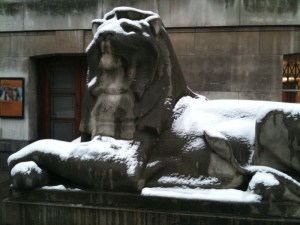
I made it into London yesterday in the constant snow: here is one of the Lions in front of the British Museum, looking a bit chilly. I had a meeting there as part of the Linksphere project, we hope to do some collaborative research with them on various things (early days, few details to share at yet, but exciting possibilities and a great meeting). The interesting thing I want to highlight was how this came about. We are only 10 mins walk up the road from the BM, but its often hard to meet likeminded people in other organisations. So how did we get together? Because someone important at the BM saw some of @Clairey_ross‘s twitter posts, about the research we are doing. And lo, social media does lead to some new research possibilities.

Other things that are happening. I’m writing a book chapter about truth and representation in digital images, and particularly digitised images of text, and the implications that this has for manuscript based scholarship. How did this come about? A silly game on Facebook, which looks for the longest word you can make from letters in your name. Mine is materialisms, apparently. And a friend joked that that was ironic, given that my research primarily exists in the digital, rather than material world. To which I said that I was editing a book on Digitizing Material Culture – and forementioned friend, who is an expert in classical art, particularly theories of representation, said “have you ever thought of applying *that* to *this*? Which of course I hadnt. And now I shall. See, Facebook was useful for my work, after all.

Its these connections, and happenstances, which are perhaps the most useful? amusing? thing for me about social media. Sure, there is all the web 2.0 stuff – such as DHNow, – but I’m enjoying the unexpected.

In the olden days (ie ten years ago), I used to enjoy looking at the books next to the books I needed in the Library. They invariably had the thing I was really looking for, or sent you off on another, random, unexpected trail. I’m glad that social media, for me, is starting to allow the same things to happen.

If you are not doing anything next week, and happen to be around Oxford, I’m helping chair an eScience Institute workshop on users, research, and web 2.0. Plenty of interesting speakers about interesting research in the area. There are still spaces, and its free: do come along.


Merry Christmas

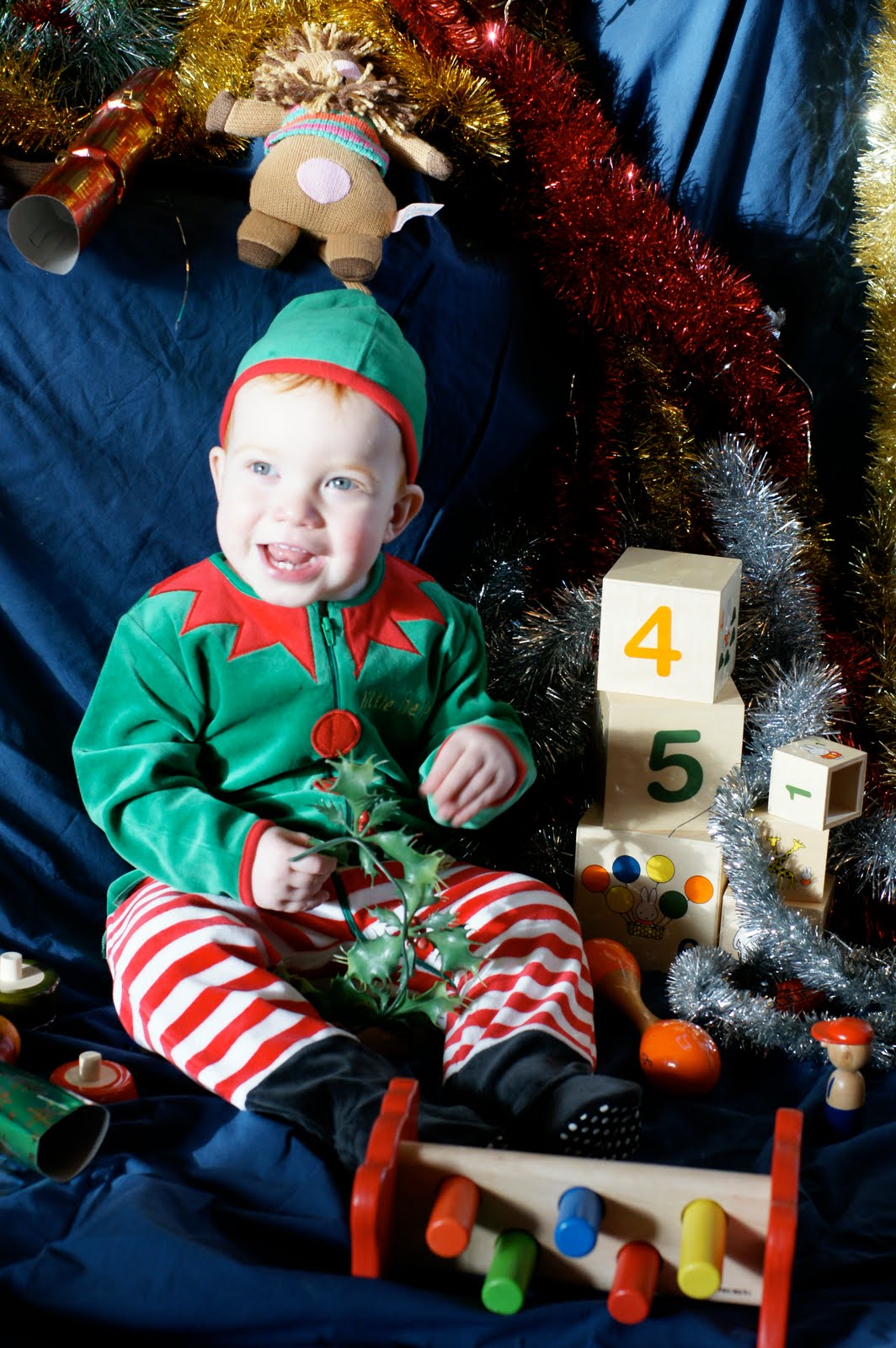
Well. I almost survived first term. Am missing the last lecture due to a nasty bout of tonsillitis (although it looks like London will be hit by snow tomorrow anyway!). Hope you have a good break – and here is a picture of my lil’ xmas elf to bring some festive cheer. See you in the new year!

The Caucus Race


Its been a terrifically busy few weeks. Aside from teaching, I’ve been jetting off to various places – Hamburg for the ALLC midterm meeting, Reading for the VERA workshop, and this week to Oxford, where I was chairing a workshop on Users and User Centered Design at the IEEE e-Science meeting, as well as dropping in on the eSAD project.

In between the gadding about and the stress as we come towards end of term, moments of wow: arent I lucky. The picture above was taken from where I was sitting in the Senior Common Room at Christ Church, after dinner at High Table. A simple fire screen, you may think. But this fire screen is made up of De Morgan tiles which the maths lecturer, Charles Dodgson, had commissioned, to line his fireplace. Dodgson is better known under his pen name, Lewis Carroll, and there are all kind of things dotted round Ch Ch college which he either incorporated into his story of Alice in Wonderland, or were later produced after its success. To the bottom left of the screen you can see the Dodo, peering out. The Gryphon is top mid left. Did the tiles come before or after Alice was published? I’m not sure (this book would tell me if I had the time to look it up, Google Books will only let me see snippets). In any case, a lovely object to sit in close proximity to, whilst sipping coffee with good friends.

Now back to the grind. 5.5 working days ’til end of term!

Behind the Scenes at the Museum


Today was one of my favourite teaching sessions as part of the Digital Resources in the Humanities class. The class assignment is to compare and contrast the digital version of a digitised object with its original: what is lost, what is gained, and how the experiences in accessing the “object” differ. So today’s class visit was a behind the scenes tour of the Petrie Museum of Egyptian Archaeology (one of London’s Hidden Gems, apparently). Students were set a few objects on the website, that they have to locate in the museum, and compare and contrast the different experiences they had of viewing the virtual object to visiting the original. What fun – followed by a discussion of aspects that came up over their hour’s visit, and looking in detail at the digitisation program the Petrie carried out (80,000 objects over a very short period of time indeed. We calculated in class that gave an image capture time of around 2 minutes per object).

I feel really lucky to be at UCL and to have such a great museum on the doorstep – and thanks go to the conservator, Susi Pancaldo, for giving us a behind the scenes tour. The snapshot above shows a pic of a mummy that is awaiting conservation.