DRHA

I popped up to Cambridge, just for the afternoon, on Tuesday, to partake in a couple of sessions at Digital Resources in the Humanities and Arts 2008.

(Those of you who know me will know its the first time I’ve really been out and about for about 5 months – given I’ve been learning to walk again – and I was pleased to be able to hobble about without even crutches for a few hours, inbetween being dropped off and picked up at the door. (Thanks, Os.) It was great to chew the fat/ shoot the breeze / smoke the peace pipe with some friends and colleagues over a coffee or two, and to see a few papers. (Thanks to Claire Warwick who gave the VERA paper, given my head is still a little addled). A nice intro back into academia. I’m not actually back from maternity leave until April, but I dont think you can really switch your brain off entirely for that long – and I have no plans to!).

But while it was grand for me on a personal level, I noticed the conference was a little…. quiet. Tumbleweedy. Some of the usual suspects weren’t there, and there didnt seem to be too many non-usual suspects filling up the numbers – the attendance at the couple of sessions I went to was relatively poor. I wonder whether I hit the conference at a lull, or is this says something about the tides of our subject? Is it usual wax and wane, or are people moving onto other conferences, other topic matters, other more subject-based meetings?

I’ve argued before that digital humanities will be a true success when the technologies are just integrated into usual working practices within the various domains in the humanities, and there will be no need for conferences about “using computers” as people will just be using computers in the humanities, without a big hoopla. There should come a time where conferences on, say, English Lit or History will welcome those using computational methods as bona fide scholars. Is that where we are already? I suspect not yet. But DRHA felt a long way from the heady days of, say, Sheffield 2000 or Glasgow 98, which both had a large attendance, and a real buzz about the subject.
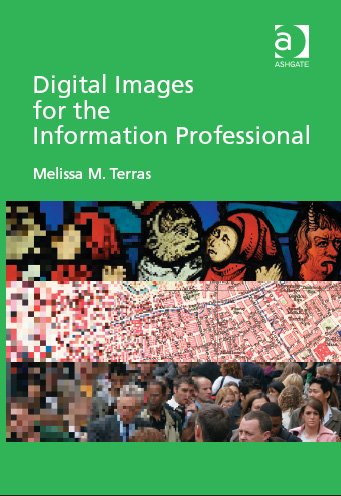
Proofs!

Here is a copy of the book cover! well, the proof of the book cover. Seems like its getting more and more real! Expected publication date – end of October. Must go and check the blurb for typos now.

I am childishly excited!

Ebay Art

A new exhibition opened yesterday at the Hayward:

Art Bought Online

A range of images and objects have been selected by Hayward Curatorial Associate Tom Morton and purchased from the auction site eBay.co.uk over a two-week period in August 2008. The chosen pieces reflect Britain’s ‘hidden’ art – works that have occupied people’s homes rather than the public space of a gallery, offered for sale through the democratic marketplace of the internet. View Basket comprises everything from Victorian paintings to original comic art, from customised action figures to ephemera by leading art world figures. An ever-expanding selection of works fill the gallery as new items arrive during the run of the exhibition, reflecting the project’s open-ended nature. It also includes a display of the improvised and sometimes highly idiosyncratic packaging in which these items have been sent to The Hayward. When the exhibition ends the works will become part of The Hayward’s archive.

Genius. Hope to get to go and see it. We have quite a collection of artworks adorning our walls from ebay – its a great place to get unusual prints for cheap. (I’d tell you the name of my favourite dealer, but you may bid the prices up….)

Busy Busy Bee

… I’m dealing with my book proofs at the moment. I have a couple of weeks to turn them around.

Which would be entirely not-a-stress, if some helpful copy-editor hadnt gone through and changed the grammar at least once on every page, to “fix” sentences until they dont make sense. And I’m having to keep an eye out for those, as well as my own typos.

They’ve put “the” in front of everything, for some the wierd the reason.

For example:

Original text: 40,000 books from Harvard will be digitized.

“Corrected” version: The 40,000 books from the Harvard will be digitized.

Eh?

Photosynth

A great presentation from TED about Photosynth, a new system to look at digital images, which merges photos and builds VR models on the fly from underlying image data – such as all the pics on Flickr labelled with one tag. Really worth scrolling through to about 4mins in, seeing the demo with Notre Dam.

The best of times, the worst of times

The Urban Dictionary is a fascinating example of the whole web 2.0 caboodle – a dictionary of american slang written by “you”. Its handy when decoding some comments left on blogs (such as gr7, rotflmao, lulz) or figuring out what the titles of British romcoms are actually referring to (I wont link to examples here, as they are invariably dubious activities of a sexual nature).

But then you see the definition of real words, like, I dunno, “feminism“. And we see the trolls emerge. Are all commonly used web 2.0 sites so sexist? Misogynistic? Abusive? In this brave new t’interweb world, my heart sinks (and blood boils) that the mirror is held up to society, and the same old same old often emerges.